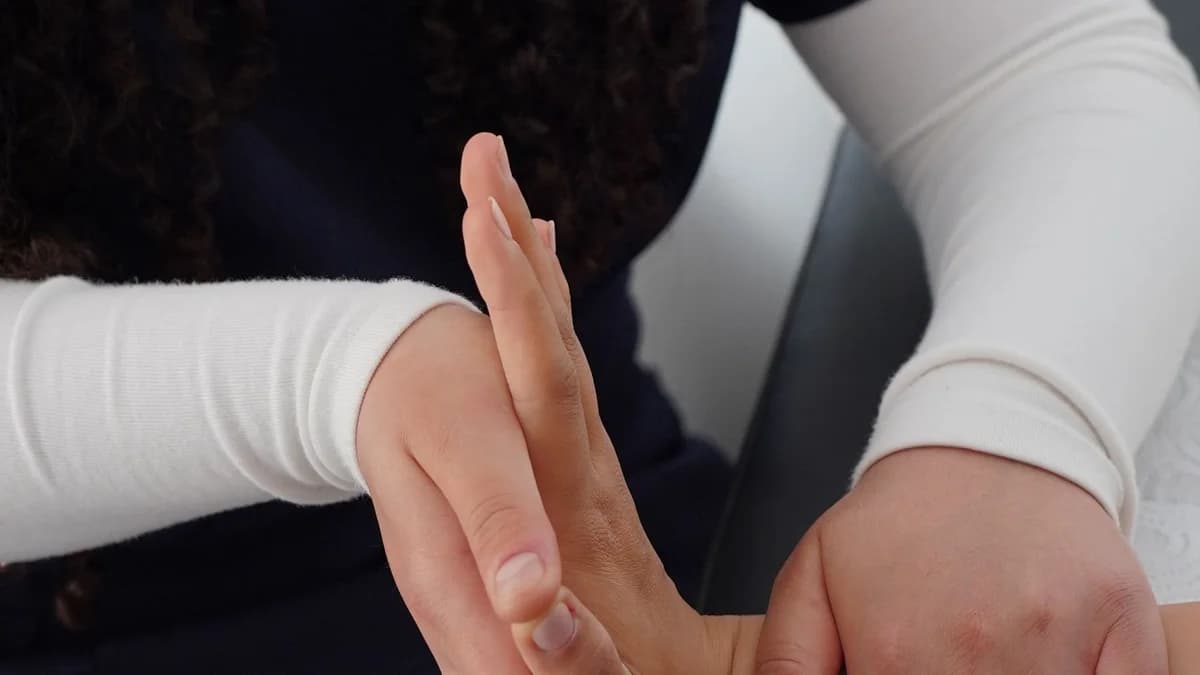
Most stroke survivors leave rehab with a stack of hand exercises and good intentions. A week later, the routine fades — not from lack of effort, but because home life does not look like a clinic.
The gap is not motivation. It is design. A hand therapy routine that sticks is short, visible, and tied to something you already do every day.
Start smaller than you think
Therapists often prescribe 30–45 minutes of exercises. At home, that is hard to protect. Five to ten focused minutes beats an ambitious plan you skip three days in a row.
Pick two or three movements your therapist flagged as highest priority — grip, finger extension, wrist rotation — and cycle through them. Quality and consistency matter more than volume.
Anchor exercises to existing habits
Link therapy to something you already do:
- Morning coffee — three grip squeezes before the first sip
- TV commercial breaks — finger taps on a table
- Brushing teeth — open and close the affected hand ten times
When therapy sits inside a habit you never miss, it stops feeling like an extra chore.
Use feedback you can feel
Progress after stroke is often subtle. Without feedback, it is easy to assume nothing is changing and quit.
Look for small wins:
- Opening a jar that was impossible last month
- Holding a phone with less fumbling
- Typing one more letter before fatigue sets in
Write one note per week — even a single sentence — about what felt easier. That record keeps you honest on hard days.
Reduce friction before you need willpower
Set up your space the night before. Put a stress ball on the kitchen counter. Leave a resistance band on the chair where you watch TV. The fewer steps between you and the exercise, the more likely you are to do it.
If setup takes longer than the exercise itself, the routine will not survive a tired afternoon.
When to push and when to rest
Some soreness after exercise is normal. Sharp pain, swelling, or spasticity that spikes is a signal to stop and check with your therapist or physician.
Fatigue is real. On low-energy days, do one movement well instead of skipping entirely. Maintaining the habit matters as much as the reps.
Tools that help at home
HandTherapy.app offers bite-sized sessions designed for daily consistency — short enough to finish, structured enough to know you are doing the right thing. It is built for the part of recovery that happens outside the clinic.
Your therapist's plan should still lead. Use apps and home tools to support adherence, not replace clinical guidance.
A simple weekly template
| Day | Focus | Time |
|---|---|---|
| Mon | Grip + release | 8 min |
| Tue | Finger isolation | 8 min |
| Wed | Rest or gentle stretch | 5 min |
| Thu | Wrist + forearm | 8 min |
| Fri | Grip + release | 8 min |
| Sat | Functional task (button, coin, zipper) | 10 min |
| Sun | Review notes; plan next week | 5 min |
Adjust with your therapist. The template is a starting point, not a prescription.
The bottom line
Hand recovery is a long game. The survivors who make the most progress at home are rarely the ones with the longest exercise lists — they are the ones who show up a little, most days, and notice when things shift.
Build the smallest routine you can keep. Protect it like a meeting. Let the wins accumulate.