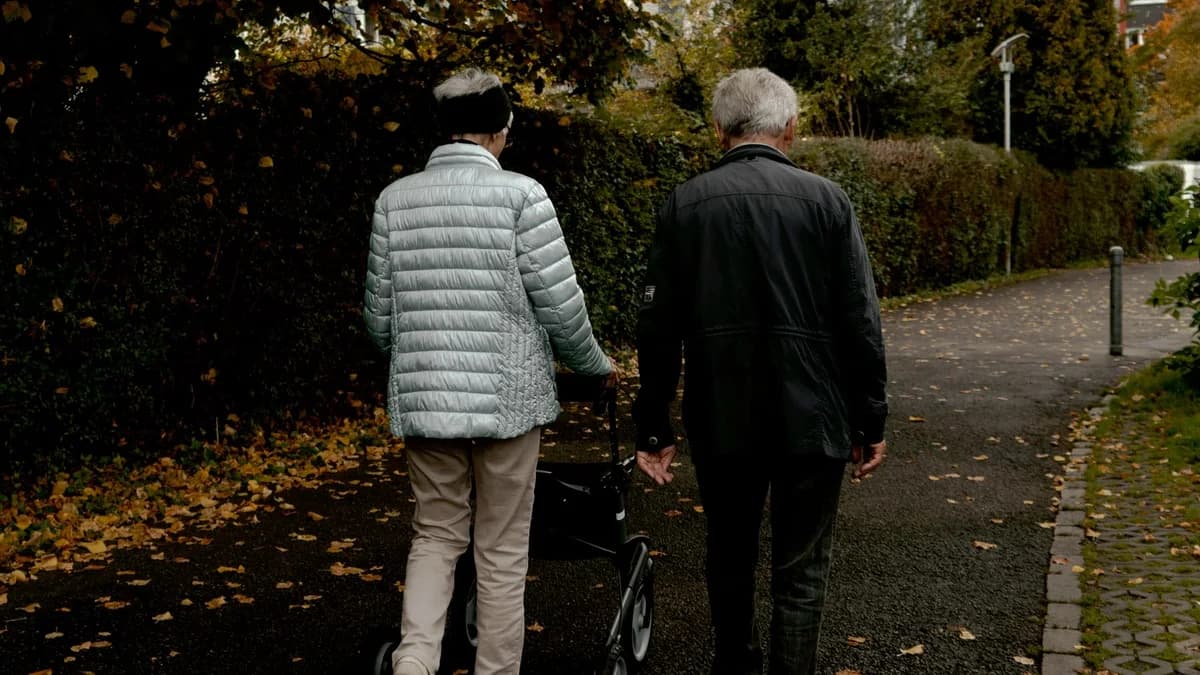
Falls are one of the most common — and most under-discussed — risks after stroke. Up to 87% of stroke survivors experience a fall within the first year. The causes stack up: weakness on one side, balance changes, vision problems, fatigue, and medications that affect blood pressure.
Prevention reduces how often falls happen. But because no plan eliminates them entirely, a good approach covers all three stages: prevent, detect, and respond.
Why falls happen more after stroke
A fall is rarely about clumsiness. After stroke, several factors often combine:
- Hemiparesis — weakness or reduced control on one side
- Balance and coordination changes from the stroke itself
- Vision or spatial neglect that hides obstacles on one side
- Fatigue, which worsens through the day
- Blood-pressure dips when standing, sometimes from medication
Understanding the cause helps target prevention. Someone who falls in the evening may be fighting fatigue; someone who falls when standing may need their medication timing reviewed with their physician.
Prevent: lower the everyday risk
Most prevention is about reducing friction and surprise in the spaces used most.
- Clear walking paths of cords, rugs, and clutter
- Add grab bars by the toilet, shower, and bed
- Improve lighting, especially on the path to the bathroom at night
- Wear supportive, non-slip footwear — not socks on hard floors
- Rise slowly in stages: sit up, pause, stand, pause, then walk
- Keep frequently used items within reach to avoid stretching or climbing
A physical or occupational therapist can assess gait, recommend assistive devices, and train safe transfers. For a deeper room-by-room walkthrough, see our home safety checklist after stroke.
Detect: the danger of a fall no one notices
The risk of a fall is not only the impact. It is the time spent on the floor afterward — unable to get up, unable to call for help. For survivors who live alone, an unnoticed fall can turn a minor stumble into a medical emergency.
This is why detection matters as much as prevention. The goal is to make sure that a fall is never silent — that someone knows quickly, even if the survivor cannot reach a phone or speak.
Respond: what to do in the first minutes
If you fall, or you are helping someone who has:
- Pause and assess before moving. Check for pain, especially in the head, hip, or wrists.
- If there is severe pain, a head impact, or any new stroke symptoms, call emergency services and do not move. A fall can also be the result of a new stroke — run a quick BE-FAST check.
- If it seems safe to get up, do it slowly: roll to the side, push up to hands and knees, crawl to a sturdy chair, and rise in stages.
- If you cannot get up, call for help, stay as warm as possible, and shift position periodically to protect the skin.
- Report every fall to the care team, even one without injury. Falls reveal patterns worth fixing.
When living alone, plan for the worst minutes
For survivors who live independently, the hardest scenario is a fall with no one there. A backstop that works without speech or reaching a phone closes that gap.
StrokeSiren includes proof-of-life checks that raise an alert if the user stops responding, an incapacitated mode that monitors and notifies the care team automatically, and live location sharing so responders know exactly where to go. For someone prone to falls and living alone, that monitoring turns "no one knew for hours" into "help was already on the way."
Technology is a safety net beneath good prevention — not a substitute for it.
A simple fall-readiness check
| Area | Question | Action if no |
|---|---|---|
| Bathroom | Are there grab bars? | Install by toilet and shower |
| Night path | Is the route to the bathroom lit? | Add motion or plug-in lights |
| Footwear | Non-slip shoes worn indoors? | Replace socks-only habit |
| Medication | Any dizziness on standing? | Review timing with physician |
| Living alone | Would a fall be noticed quickly? | Set up detection or check-ins |
The bottom line
Falls after stroke are common, but they are not random — and they are not entirely out of your control. Prevent what you can with a safer space and slower transitions. Detect what you cannot prevent so no fall goes unnoticed. And know exactly how to respond before it happens.
Build all three layers, and a fall becomes a setback to manage — not a crisis that catches everyone off guard.